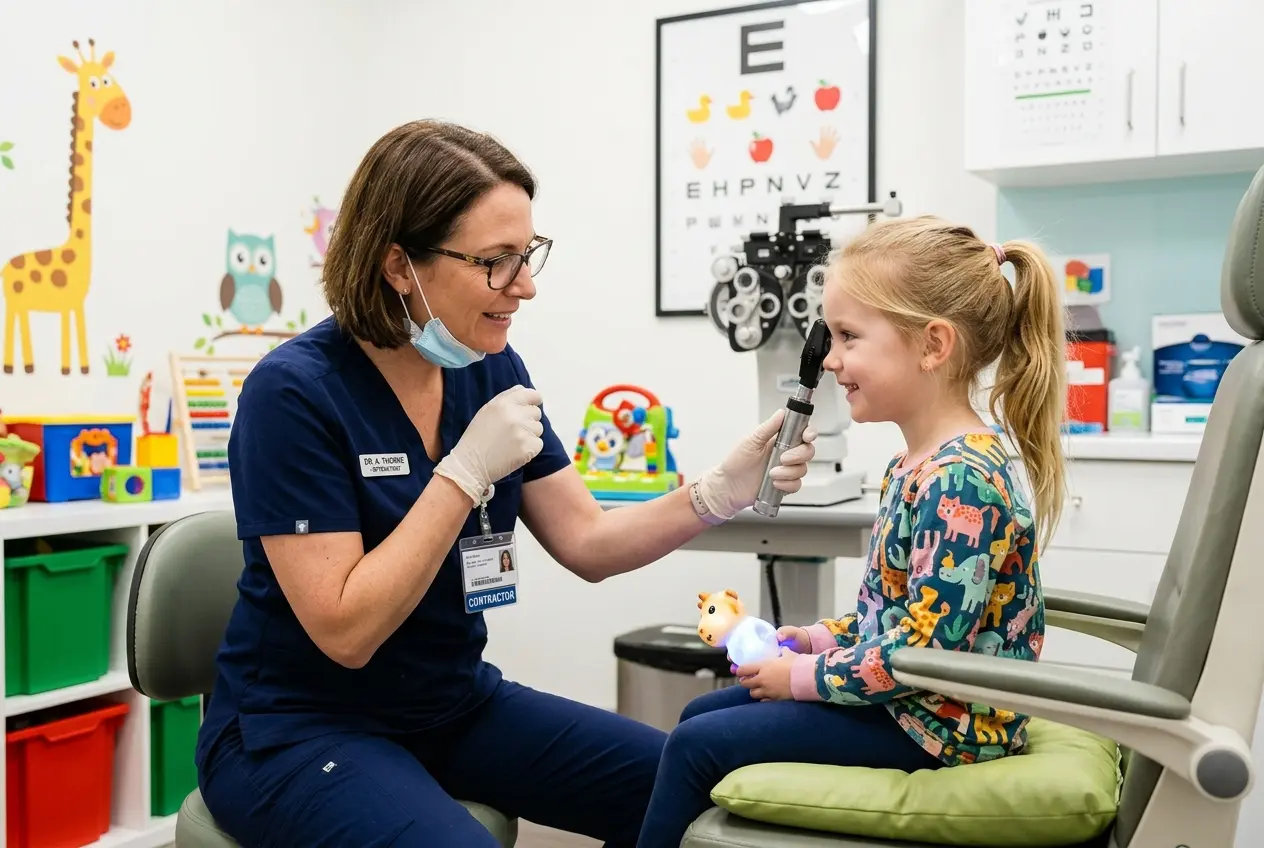
Children's vision needs differ significantly from adults, especially in Richmond's school districts with varying classroom environments. Our pediatric eye exams assess visual development while keeping young patients comfortable and engaged. We screen for common childhood vision problems that might affect learning in Virginia's schools.
For families in Church Hill's historic homes or newer developments in Short Pump, we provide guidance on screen time management and outdoor play recommendations to support healthy vision development. Our child-friendly approach makes eye exams a positive experience, helping establish lifelong eye health habits.
For families in Church Hill's historic homes or newer developments in Short Pump, we provide guidance on screen time management and outdoor play recommendations to support healthy vision development. Our child-friendly approach makes eye exams a positive experience, helping establish lifelong eye health habits.
Our Process
- 01 Step 1: Age-appropriate vision screening techniques
- 02 Step 2: Assessment of eye teaming and focusing skills
- 03 Step 3: Evaluation for common childhood vision conditions
- 04 Step 4: Parent consultation with practical recommendations
Benefits
- Early detection of vision problems
- Child-centered examination approach
- School performance insights
- Preventive care guidance
Frequently Asked Questions
At what age should children have their first eye exam?
We recommend a comprehensive exam by age 3, or sooner if you notice signs of vision problems.
How do Richmond schools' vision screenings compare to eye exams?
School screenings check basic acuity but miss many vision problems. Our comprehensive exams evaluate all aspects of visual function.
Can vision problems cause learning difficulties?
Undiagnosed vision issues can mimic learning disabilities, which is why thorough eye exams are crucial for struggling students.